
Close

Ready to start our journey together?
We’re not for everyone, but if you’re ready to build something great, let’s connect.
Oops! Something went wrong while submitting the form.
We’re not for everyone, but if you’re ready to build something great, let’s connect.
Strong security isn't just protection- it's part of the experience. Discover why trust and UX go hand in hand.

Cybersecurity is often viewed as a technical concern- something that happens behind the scenes, managed by developers, security teams, and compliance specialists. Yet for users, security is something they experience directly. Every login, payment, account creation, and data-sharing interaction contributes to a sense of trust- or a lack of it. In today's digital landscape, security is no longer just about protecting systems. It has become a critical part of the user experience itself. 1
Trust is one of the most valuable assets a digital product can build. Users willingly share personal information, payment details, and business data with the expectation that it will be handled responsibly. Research consistently shows that consumers are increasingly concerned about privacy and data protection, making trust a major factor in whether they adopt or continue using a digital service.2 When security measures are absent, unclear, or poorly implemented, users notice. More importantly, they remember.
The challenge is finding the right balance between protection and convenience. Excessive security requirements can frustrate users and increase abandonment rates. Long forms, repeated authentication requests, and confusing verification processes often create friction. On the other hand, weak security can expose users and businesses to significant risks. The best digital experiences combine strong protection with simplicity, making security feel natural rather than intrusive.
This is where user-centered security design becomes essential. Features such as biometric authentication, single sign-on, multi-factor authentication, and transparent privacy controls help users feel protected without overwhelming them. These tools work because they reduce effort while increasing confidence. When users understand what data is being collected, why it is being collected, and how it is protected, they are more likely to trust the product and continue using it.
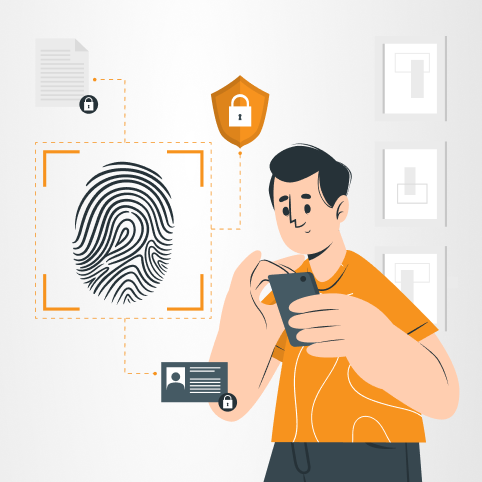
Security also extends beyond authentication. Performance, reliability, and data integrity all contribute to how secure a product feels. A website that crashes frequently, displays unexpected errors, or behaves inconsistently can undermine confidence even if it is technically protected. Users often associate reliability with security. In other words, a stable experience builds trust just as effectively as encryption or access controls.
Regulatory requirements are also shaping expectations. Frameworks such as GDPR have increased awareness around privacy and user rights, encouraging organizations to adopt transparent data practices.3 Today's users are more informed than ever and increasingly expect businesses to treat security as a fundamental feature rather than a legal obligation.
For growing digital products, security must be built into the architecture from the beginning. Retrofitting protection after launch is expensive, disruptive, and often incomplete. Forward-thinking organizations treat security as part of the product design process, integrating it into every stage of development. This approach not only reduces risk but also creates better user experiences by eliminating unnecessary friction and building confidence from day one.
At Lynx Solutions, we see security and user experience as two sides of the same coin. Effective protection should not make products harder to use- it should make users feel comfortable interacting with them. By combining secure architecture, thoughtful UX design, and privacy-conscious development practices, we help businesses create digital experiences that users trust.
Ultimately, great security is invisible. Users should not have to think about encryption protocols, compliance standards, or monitoring systems. What they should feel is confidence. The most successful digital products are not those that simply prevent threats, but those that create an environment where users feel safe, supported, and in control. That confidence is what transforms security from a technical requirement into a competitive advantage.


